Golfers seeking to improve accuracy and consistency often turn to swing path trainers. These aids help players visualize and rehearse the correct plane, reduce slicing or hooking, and reinforce repeatable mechanics. The following review highlights five top picks that emphasize path feedback, plane guidance, and practical practice for home, driving range, or office spaces. Each product below is designed to reinforce a repeatable swing, promote better ball striking, and support longer, straighter shots across the bag. Use this guide to compare features, portability, and how each trainer aligns with your skill level and practice routine.
| Product | Brand | Key Benefit |
|---|---|---|
| Speed Trap 2.0 Swing Path Trainer | EyeLine Golf | Fix slice/hook with guided swing plane |
| CHAMPKEY Magnetic Swing Trainer | CHAMPKEY | Instant path and plane feedback |
| Divot Board Swing Path Trainer | GolfTrainingAids | Immediate, visible path feedback via divots |
| Birdie Mat Pro Swing Training Mat | Birdie Bath | Color-change feedback for swing path and ball impact |
| Orange Whip Mid-Size Swing Trainer | Orange Whip | Rhythm, tempo, and swing plane development |
Speed Trap 2.0 Swing Path Trainer

EyeLine Golf’s Speed Trap 2.0 is designed to instantly improve your golf swing path and address common misalignments. The trainer focuses on fixing slices and hooks by guiding the club through a more precise plane, helping you break over-the-top tendencies. The system uses removable red rods to steer your swing along an ideal path, supporting the ability to hit a consistent draw or fade while refining overall path control. This training aid emphasizes muscle-memory development for a repeatable swing, with potential improvements in swing speed and shot direction across clubs. For players seeking a practical at-home or driving-range solution, the Speed Trap 2.0 offers a compact setup that encourages mindful practice and repeatable arc.
CHAMPKEY Magnetic Swing Trainer

CHAMPKEY’s Magnetic Swing Trainer is built around composite guides that provide instant feedback on swing path and plane. The device includes a bungie and magnet system to keep guides in place, preventing components from flying away on impact. This design supports players in developing a more reliable swing, which can translate into improved accuracy and greater distance. By offering immediate, tangible cues about swing path and plane, the CHAMPKEY trainer facilitates quick adjustments during practice sessions and can be a valuable tool for golfers working to correct over-the-top motions or inconsistent tempo. It’s particularly suitable for players who benefit from structured feedback and a compact, travel-friendly training setup.
Divot Board Swing Path Trainer
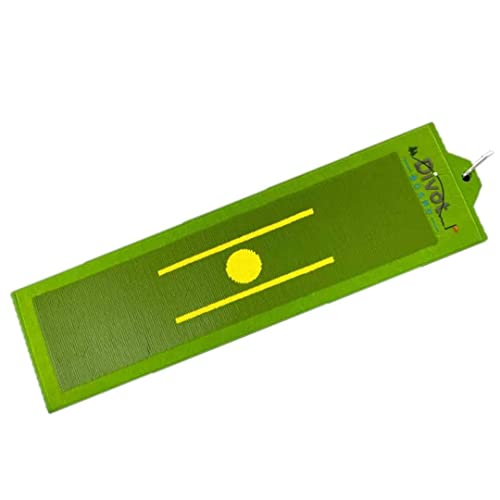
Divot Board offers immediate feedback anywhere you swing a golf club, focusing on path and impact through a simple divot-reading approach. By interpreting ball flight and strike quality from the created divot, players can gauge their low-point control and adjust practice to improve contact consistency. The Divot Board emphasizes on-course transfer, helping you translate practice results to live shots on the range or course. It’s a practical option for golfers who want a low-tech, cost-effective way to observe swing path changes in real time and build reliable contact over multiple practice sessions.
Birdie Mat Pro Swing Training Mat

The Birdie Mat Pro provides instantaneous swing feedback through a color-change cue when the club makes contact with the mat. This immediate visual signal helps golfers analyze swing path, ball contact, and overall consistency during practice. The mat features a built-in handle for easy portability and is designed for versatile use at the driving range, backyard, or indoor practice spaces. Practitioners can train with or without a ball, enabling focused work on mechanics, tempo, and contact quality. The Birdie Mat Pro supports repeated, deliberate practice to reinforce a repeatable swing that can carry over to on-course performance.
Orange Whip Mid-Size Swing Trainer

Orange Whip’s Mid-Size Swing Trainer is a time-tested tool for rhythm, flexibility, balance, tempo, and swing plane development. The #1-rated original golf training aid uses a patented counterbalanced shaft system to deliver meaningful feedback that helps increase range of motion, improve coordination, and reinforce a strong core golf motion. At 43.5 inches, the mid-size model suits a wide range of players, from beginners to seasoned golfers who want a dependable warm-up and practice aid. It’s particularly valued for integrating body movement with swing mechanics, promoting a smoother tempo and more repeatable club delivery across different clubs.
Buying Guide
Key purchase considerations
Choosing a swing path trainer depends on how you practice and what you want to improve. Consider whether you prefer visual feedback (color changes, indicators), mechanical guides (rods, magnets), or a versatile mat that also addresses balance and rhythm. Evaluate the space you have available, since some aids require more room for safe use. For beginners, a simple path cue and a forgiving surface may yield quicker progress. For more advanced players, magnetic guides or multi-surface mats can challenge and refine swing plane while offering precise feedback on swing path and impact.
Feedback type and realism
Instant feedback is essential for rapid improvement. Visual cues, such as divot indicators or color-change mats, help you see when your path deviates. Mechanical guides and magnetic systems provide physical cues that reinforce correct movement. A training aid that closely mirrors real-world conditions—such as a mat that simulates turf or a device that guides a swing along a real plane—can enhance on-course transfer. When evaluating options, balance the depth of feedback with how intuitive the setup feels to avoid slowing practice with overly complex arrangements.
Portability and space
Home practice requires an adjustable footprint. Compact devices with easy assembly and light weight are ideal for apartments or small offices. Mats that fold or roll up are convenient for travel to the range or hotel rooms. If you frequently practice on the go, prioritize lightweight design, quick setup, and durability under repeated use. For drivers or players with a longer practice session, a more robust trainer that stays in place during full swings may be preferable.
Durability and materials
Look for materials that withstand repeated impact, weather exposure, and frequent handling. Vinyl and turf-like surfaces should resist fading and wear without compromising feedback clarity. Magnetic guides and bungie systems should retain alignment after impact to avoid degradation of feedback. A well-built trainer reduces the need for frequent replacements and offers more consistent practice sessions over time.
Value and intended user level
Assess how a trainer fits your skill level, budget, and goals. Beginners may gain the most from simple path cues and a forgiving mat, while intermediate and advanced players can benefit from advanced path guidance, plane enforcement, and precise feedback. Consider whether you want a single-purpose tool (path guidance only) or a multi-function trainer (path, tempo, and impact feedback) to maximize your practice sessions and overall game improvement.
Across these five picks, the common aim is to reinforce a repeatable swing path and improve contact quality. Each option targets different aspects of swing learning—from path correction and plane awareness to tempo, rhythm, and impact feedback. By aligning a trainer’s features with your current practice routine and space, you can maximize training efficiency and better translate drills into on-course performance. Remember to integrate usage with a balanced practice plan, including drills that emphasize tempo, swing plane awareness, and consistent contact to support tangible progress over time.