In this guide
Choosing the right wedge is essential for a precise short game. This guide reviews five top golf wedges with varying lofts, grinds, and finishes designed to help you spin, control distance, and escape bunkers around the greens. Each option emphasizes spin, stability, and forgiveness, making them suitable for a range of skill levels. Whether you value a forged feel, full-face grooves, or a versatile grind, these wedges are designed to improve your confidence on tight lies and slick greens. Use the buying guide below to compare features and find the best fit for your swing and course conditions.
| Product | Brand | Loft | Key Feature |
|---|---|---|---|
| Callaway Opus Wedge | Callaway | 60° | Spin Gen Face Technology with multiple grinds |
| Gowolf 69 Degree Wedge | Gowolf | 69° | Full-face grooves and CNC milled face |
| Sixtynine 69 Degree Wedge | 69 | 69° | Advanced groove patterns and weight distribution |
| Full Choice 70 Degree Sand Wedge | Full Choice | 70° | Variety of lofts; forged construction |
| Pinemeadow Pre Wedge | Pinemeadow Golf | 64° | High-quality steel; standard grip |
Callaway Opus 60 Degree Wedge

The Callaway Opus wedge leverages Spin Gen Face Technology to deliver tour-level spin and stopping power, making it a strong option for greenside control. The design features a higher toe peak and a radius in the leading edge, which improves turf interaction and makes it easier to set up for precise open-face shots. Callaway also offers a complete lineup of sole shapes—from narrow to wide—with versatile grinds (S, W, C, and T) to match a player’s swing style and preferred turf conditions. This blend of geometry and grind variety helps players dial in spin and trajectory across a range of greens and bunkers.
With Opus, players benefit from a wedge that combines modern technology with a traditional look at address. The result is predictable turf interaction and cleaner contact on delicate chips. For golfers who value a distinctive feel and the option to select a grind that fits their swing, Opus provides a balanced option that adapts from precise putt-and-chip shots to full swings around the green. The emphasis on precision and consistency makes it a relevant choice for players seeking reliable spin control in a 60-degree wedge.
Gowolf 69 Degree Wedge

Gowolf wedges are built for spin and control, with an aggressive CNC milled face and ultra-sharp grooves designed to bite into the ball for maximum spin from various lies. The textured face also enhances friction, contributing to more reliable stopping power on short shots. The design includes an anti-glare finish and carefully weighted distribution to help with alignment and contact, particularly on delicate bunker or flop plays where precision matters most.
Forgiveness is a core focus of Gowolf’s 69-degree model. The full-face grooves extend across the entire clubface, helping maintain spin even on off-center hits. In addition, the forgiving leading edge reduces digging at impact, promoting cleaner turf interaction and smoother turf-swap transitions. For players seeking consistent spin and a confidence-inspiring setup for mid-to-high trajectory chips, this wedge offers a compelling balance of bite and forgiveness.
Sixtynine 69 Degree Wedge
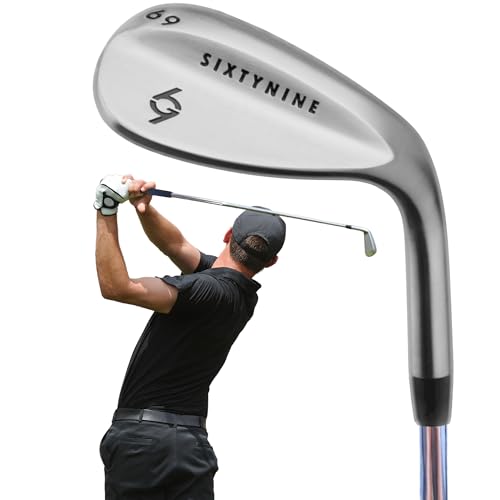
Sixtynine wedges emphasize spin control through advanced groove patterns and optimized surface roughness. This combination is designed to maximize stopping power on greens while maintaining reliable consistency across different turf conditions. The full-face groove design helps deliver consistent bite even on off-center hits, giving golfers more confidence when approaching delicate chips or flop shots.
Durability and performance are central to Sixtynine’s approach. The wedges are crafted with quality materials and attention to weight distribution, enabling better distance control and trajectory management. For players seeking a mid-to-high spin wedge with dependable performance and a strong value proposition, Sixtynine’s 69-degree model provides a solid option for greenside versatility and shot-making variety.
Full Choice 70 Degree Sand Wedge

The Full Choice 70 Degree Sand Wedge is designed to enhance short-game performance with a forged construction that balances feel and durability. It emphasizes reliable contact around greens and from greenside bunkers, helping players execute precise sand saves and delicate chips. The forged feel can contribute to better feedback on off-center hits, aiding players in refining their technique through repeatable contact.
This wedge also offers a broader loft range (up to 70 degrees) to fit various playing styles and course conditions. With options across lofts and a robust build, Full Choice delivers a versatile wedge that can support complex short-game scenarios, including high-floaty flop shots and controlled sand escapes while maintaining consistency across shots and lies.
Pinemeadow Pre Wedge 64 Degrees

Pinemeadow’s Pre Wedge 64 Degrees emphasizes standard, dependable performance with a high-quality Apollo steel construction. The 125-gram shaft and a mid-to-low kick point offer predictable launch characteristics and good distance control for a wedge that prioritizes value and consistency. The 64-degree loft is well-suited for mid-range approach shots, sand play, and controlled chips around the green, especially for players seeking reliable feel and straightforward setup.
The design focuses on practical reliability, with a standard grip and weight distribution tuned for solid contact. Pinemeadow’s wedge aims to provide a straightforward option for players who want a functional, durable club without complex grind options, making it a sensible choice for developing short-game confidence and repeatability on a range of bunker and greenside scenarios.
Buying Guide
Key Purchase Considerations
- Loft and distance gaps: Match the wedge lofts to your existing set to ensure smooth distance progression. Common greenside options range from about 54° to 60°, with higher-loft models (like 64° or 70°) offering more control on short, high shots.
- Grind and sole design: The sole grind (S, W, C, T, etc.) influences turf interaction and shot versatility. Narrow grinds suit tight lies, while wider grinds can help with bunker play and face opening. Choose a grind that complements your swing arc and typical course conditions.
- Groove technology and face design: Full-face grooves maximize spin on mis-hits, while traditional groove patterns may favor classic shots. Face milling and groove sharpness affect stopping power and consistency across shots from various lies.
- Forged vs. cast construction: Forged wedges tend to offer a softer feel and nuanced feedback, while cast wedges can provide durability and consistent performance at often lower prices. Consider your preference for feel and feedback on finesse shots.
- Material and finish: Stainless steel is common and durable; some models use tougher finishes or anti-glare treatments. Finish can influence glare at address and the club’s durability over time.
- Hand orientation and shaft: Ensure your chosen wedge matches whether you play right- or left-handed, and select a shaft with the appropriate kick point and weight for your swing tempo.
- Shot versatility: Consider whether you need full-face grooves, a variety of lofts, or specialized grinds to handle bunker shots, flop shots, and delicate chips from tight lies.
Loft Strategy For The Short Game
Loft selection shapes trajectory and stopping power. Higher lofts (around 64°–70°) help execute high, soft landings with minimal roll, ideal for flop shots and greenside bunkers. Lower lofts (around 50°–60°) offer more control and distance for versatile approach shots. A well-balanced set usually includes wedges that cover a spectrum of lies and shot types, ensuring you have a reliable tool for every greenside situation.
Grooves, Spin, And Turf Interaction
Grooves and face texture influence how much backspin a ball can generate on approach and short shots. Some wedges employ full-face grooves for consistent spin regardless of contact area, while others rely on groove geometry to optimize bite on specific lies. Consider your typical turf: tight fairways, soft greens, or fluffy sand, and select grooves and milling patterns that suit those conditions.
Construction and Longevity
Durability matters, especially for frequent players who rely on wedges in tight, abrasive conditions. Forged wedges often provide a softer feel and refined feedback, while well-made cast wedges can withstand daily wear and offer consistent performance. If you play several rounds weekly, look for robust materials, a solid finish, and known brand support for long-term performance.
Matching Wedge To Your Game
Use a practical approach when selecting wedges: identify gaps in your current short-game setup, consider your common shot shapes, and test different grinds and lofts to find the best pairing. A mix of 60°–64° wedges plus a 70° option can cover most greenside scenarios, from quick chips to high, arcing flop shots. The right blend will maximize your confidence and reduce guesswork on the course.