In this guide
If you’re chasing long efficient drives in disc golf, targeting speed 15 or close to it, you want discs engineered for maximum distance with predictable fades and stable turn. This guide highlights five distance drivers that align with fast speeds around 14–15, making them solid choices for power throwers and developing arms alike. These picks are chosen for players seeking distance without sacrificing control. Each listing includes who it’s best for, why it’s selected, and a practical caveat to consider before you buy.
Product Snapshot
- Tantrum (Axiom Discs Neutron) — Speed 14.5, Glide 5, Turn -1.5, Fade 3
- Teleport (MVP Disc Sports Neutron) — Speed 14.5, Glide 5, Turn -1.5, Fade 2.5
- Crank (Discraft Big Z) — Speed 13, Glide 5, Turn -2, Fade 2
- Tenacity (Axiom Discs Neutron) — Speed 13, Glide 5, Turn -2.5, Fade 2
- King (Westside Discs Origio Burst) — Speed varies by plastic; generally a high-speed, overstable driver (Burst version noted)
Axiom Discs Neutron Tantrum Disc Golf Distance Driver

The Tantrum is designed for power throwers who want shape and distance with a stable-understable flight. It’s a large-rim driver that delivers impressive glide and a reliable fade. In practice, it suits players who generate substantial speed and want to maximize distance on open fairways.
- Best for players seeking a long-range driver with hyzerflip potential.
- Selected for its combination of speed and glide that suits strong throwers.
- Limitation: The -1.5 turn indicates a slight understable tendency that may require confident release and form to harness fully.
Axiom Neutron Tenacity Disc Golf Distance Driver

The Tenacity is an understable distance driver in the 23 mm class, designed to produce long carries with a forgiving turn when thrown with proper form. It’s well-suited for players who can generate significant speed but benefit from a driver that helps-induced turn on power throws.
- Best for players who want a long, slightly understable flight with glide.
- Selected for its potential to add distance for those who need extra turn without sacrificing too much control.
- Limitation: Being understable means it can turn over on lower-power throws; timing and form matter for consistent results.
Discraft Big Z Crank Distance Driver
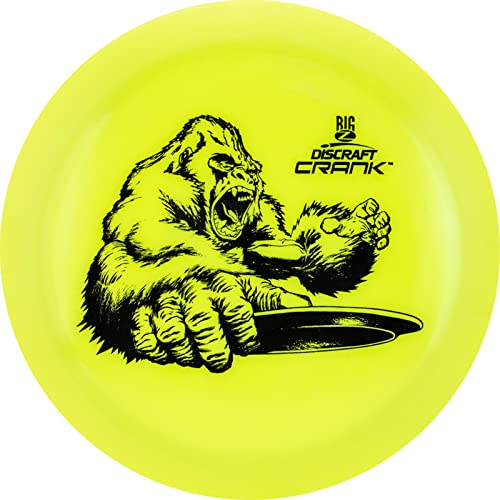
The Crank provides a high-speed profile with a balanced turn and fade that can reach substantial distances. Its versatility makes it a solid option for players with varying arm speeds who want a driver capable of handling both power shots and controlled turning drives.
- Best for mixed-power players seeking a long-range driver with reliable fade.
- Selected for its balance of speed and stability that supports big throws.
- Limitation: The color and stamp vary, which can be a cosmetic consideration for collectors or players who care about aesthetics.
Westside Discs Originio Burst King Distance Driver

The King is Westside’s flagship long-distance driver, renowned for its speed and bite on tough lines. The Burst version combines grip and a burst-pattern aesthetic, delivering a controllable long flight that suits players seeking maximum distance with strong reliability off the tee.
- Best for players who want the longest flights and can manage a powerful release.
- Selected for its reputation as a go-to maximum-distance driver across skill levels.
- Limitation: For some arms, its speed can require precise form to avoid unwanted overstability or push/dry winds.
Buying Guide: How to Choose a Speed-15 Oriented Distance Driver
- Your arm speed: If you generate high power, you can maximize speed-14.5 to 15-class drivers for longer distances. Slower arms may benefit from understable options to help turnover and keep drives straight longer.
- Stability and turning: Understand each disc’s Turn and Fade values. A more negative Turn means more turn; a higher Fade means more end-stability. Balance glide with required stability for your typical course scenarios.
- Plastic and grip: Burst or baseline plastics affect grip, weather performance, and durability. A firm grip helps in wet conditions or during aggressive throws.
- Flight path goals: Do you want straight-line distance, hyzerflip-to-turn lines, or a reliable long s-curve? Choose models that align with your preferred shot shapes.
- Environment: Open courses reward straight bombs; wooded tracks reward discs with easier turnover and control to navigate tight lines.
FAQ
- What is speed 15 in disc golf?
Speed refers to how quickly a disc can cut through the air. A 15-speed driver is among the faster category, designed for long throws by players with strong form.
- Who should throw Tantrum or Teleport?
Tantrum suits power throwers aiming for distance with hyzerflip potential; Teleport is also high-speed and good for headwinds or longer open holes.
- Is an understable driver better for beginners?
Understable drivers can be easier to turn over on slower arms, but for beginners, stable to slightly understable options often offer better confidence and growth potential.
- What plastic is best for grip in wet conditions?
Burst plastics tend to offer good grip; Origio Burst can be grippy in various weathers, but personal feel varies.
- Should I choose a King over a Tantrum?
Choose King for maximum distance on longer open holes if you can control its higher speed and stability; Tantrum can offer easier handling with good glide on a range of shots.
Buying Table: Quick Comparison
| Disc | Speed | Glide | Turn | Fade | |
|---|---|---|---|---|---|
| Axiom Tantrum | 14.5 | 5 | -1.5 | 3 | Power throwers seeking hyzerflip potential |
| MVP Teleport | 14.5 | 5 | -1.5 | 2.5 | Long, straight-stable flights |
| Discraft Crank | 13 | 5 | -2 | 2 | Long-range, balanced turn |
| Axiom Tenacity | 13 | 5 | -2.5 | 2 | Understable bomber for distance |
| Westside King | High-speed class (varies) | High | Overstable tendencies | Varies | Maximum distance with control |
These options reflect discs commonly associated with speed around 15, balanced with stability and glide appropriate for open fairways, wind-friendly throws, and various skill levels. The best choice depends on how aggressively you throw, the typical course layout, and your preferred shot shapes. Always consider trying multiple discs at a range of speeds to identify which feels most controllable for your style.