In this guide
Direct answer: for American players seeking an iron-like long-iron alternative off the tee or on tight approaches, a driving iron with a forged maraging steel face and hollow body design often delivers the best mix of distance, accuracy, and forgiveness. This guide highlights five driving irons that fit diverse swing speeds and skill levels, helping you choose based on forgiveness, face technology, and launch characteristics. Each product is best suited to specific buyers—beginners needing confidence, intermediates chasing consistency, and advanced players seeking control and speed.
Below is a quick buyer’s snapshot of five top candidates, followed by in-depth sections and a practical buying guide. The table compares the essentials to simplify your decision.
| Product | Brand | Key Benefit | Best For |
|---|---|---|---|
| PGF Gold TP Forged Driving Iron | PGF | Ultra-thin 1.7mm face for speed and stability | Players seeking distance with forgiveness on mis-hits |
| MAZEL Golf Driving Iron (2) | MAZEL | Full hollow body with CNC milled faces for precision | Players wanting easy launch and consistent spin |
| COOLO Golf Driving Iron (2#) | COOLO | Maraging steel face for speed; hollow head for forgiveness | Mid-to-high handicap players needing a larger sweet spot |
| Dynacraft Driving Iron (18°) | Dynacraft | Thin forged face with high COR for long carries | Players prioritizing distance from a stable driving iron |
| iDrive 13° Driving One Iron Wood Hybrid | iDrive Driving Iron | Senior-friendly loft with lightweight graphite shaft | Senior or slower swing speed players needing easier launches |
PGF Gold TP Forged Driving Iron

The PGF Gold TP Driving Iron combines a 431 stainless steel hollow body with a 1.7mm ultra-thin face made from 455 maraging steel. This construction is designed to maximize ball speed (COR) while delivering a low-to-mid launch with mid-to-low spin. The head size and weight distribution support forgiveness on off-center hits while promoting piercing, stable flight. Best for players who want long iron performance from a tee or tight fairway lies without sacrificing feel. Caution: the ultra-thin face technology may require careful setup to avoid undesired dispersion for very high-speed swings.
Best for: players seeking a versatile driving iron that blends distance with consistent steering on mis-hits. Choose this if you want a premium feel and faster face technology that keeps performance steady across the face.
MAZEL Golf Driving Iron 2 (2#)

MAZEL’s Driving Iron features a full hollow body with CNC milled faces and grooves for precise spin control. The design emphasizes easy launch from a low center of gravity, helping players achieve a consistent flight and longer distance than typical long irons. The combination of hollow construction and precise milling makes for a confident feel at address. Best for: players who want a forgiving driving iron that still delivers reliable workability. Limitation: CNC milling adds manufacturing precision but may still feel firmer to players who prefer a more compact head.
Best for: mid-to-high handicap players who need a larger feel at impact and predictable spin. Choose this if you value precise grooves and a confident address height.
COOLO Golf Driving Iron (2#)
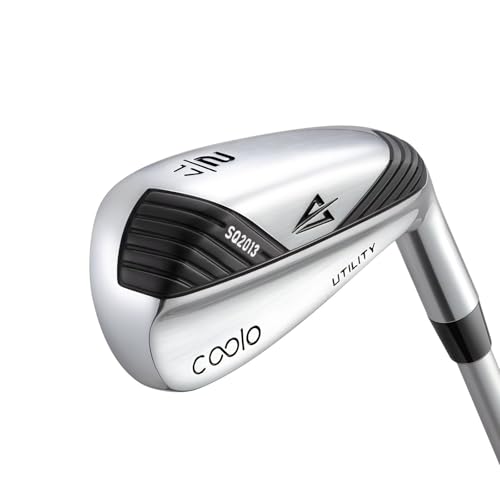
COOLO’s 2# model uses a forged maraging-steel face to boost ball speed and distance, coupled with hollow-headed construction to expand the sweet spot. The result is easier distance on tee shots and approach shots, with a larger impact zone that reduces distance loss on off-center hits. Best for: players who want a balance of speed and forgiveness. Caution: some players may notice a slightly softer feel compared to non-hollow, traditional driving irons.
Best for: players who want a forgiving driving iron with a high-strength face for faster ball speed. Choose this if you value a bigger sweet spot and easier high-launch potential.
Dynacraft Driving Iron (18 Degree)

The Dynacraft Driving Iron emphasizes a hybrid-like approach with hollow-body construction and a high-COR, thin-face forged 17-4 stainless steel face with variable thickness as low as 2.2mm. This combination aims to maximize distance while preserving control on off-center hits. Best for: players who want a driving iron that leans toward distance and trajectory penetration. Caution: the specialized face design may feel different to players accustomed to traditional driving irons.
Best for: those seeking a long-iron alternative that behaves like a hybrid off the tee, with a focus on maximizing carry distance from a low loft.
iDrive 13° Driving One Iron Wood Hybrid

The iDrive Driving Iron is designed for senior players or those with slower swing speeds. At 13° loft, this hybrid-like solution emphasizes easy launch with a lightweight graphite shaft. The premium arthritic grip is intended to reduce grip strain, aiding a smoother swing. Best for: seniors or players needing a more forgiving long-iron option. Caution: higher loft may reduce trajectory control for faster swingers seeking lower ball flight.
Buying Guide: Key Purchase Considerations
What should you look for when choosing a driving iron?
- Face technology: Ultra-thin faces and maraging-steel compositions can boost ball speed, but may alter feel. Decide whether you prioritize distance or feel off-center hits.
- Head design: Hollow bodies often improve forgiveness and launch, while compact heads provide workability for low handicappers. Consider your comfort at address and your typical miss pattern.
- Launch and spin: Low-to-mid launch with mid-to-low spin favors piercing trajectories and roll-out on firm fairways. If you struggle with height or distance, look for models that promote higher, more forgiving launches.
- Weight distribution: Precision weighting and blade length can influence stability at impact. A larger face can improve confidence, while a smaller face may offer more control for advanced players.
- Shaft and grip: Graphite shafts are lighter and cabin-friendly for seniors; steel shafts offer more feedback for faster swingers. Grips should feel secure without excessive tension.
- Versatility: Some models perform well off the tee and on fairways; others are tuned primarily for distance. Match the club’s primary use to your typical course layout.
Frequently Asked Questions
- What is a driving iron, and how does it differ from a standard iron? A driving iron has a hollow body and a higher-strength face to maximize distance while maintaining control, often with a lower launch than a typical iron.
- Who should use a driving iron instead of a hybrid? Players seeking more workability and lower, piercing trajectories off the tee may prefer a driving iron. Hybrids often suit players seeking higher launch and easier greenside control.
- Are driving irons suitable for beginners? Some models offer forgiving heads and larger sweet spots, making them accessible for intermediate players. Beginners might start with hybrids before transitioning.
- How important is face thickness in driving irons? Ultra-thin faces can increase ball speed but may change feel; thickness choices influence durability and feedback at impact.
- Should I choose a hollow-headed driving iron? Hollow heads generally provide more forgiveness and higher MOI, which helps with mis-hits, especially for higher handicaps.
- Is graphite shaft better for older players? Graphite shafts reduce weight and can aid swing speed and comfort for seniors or players with slower tempos.