In this guide
- TaylorMade Distance+ Golf Balls
- Honma 2026 D1 Distance Golf Balls
- Wilson Profile Distance Golf Ball
- Nitro Maximum Distance Golf Balls
- TaylorMade TP5X Stripe
- Buying Guide: Key Considerations For Low-Spin, Distance-Focused Golf Balls
- Who should use low-spin golf balls off the tee?
- What core and cover features matter?
- How to compare across models?
- What about alignment aids and visibility?
- Frequently Asked Questions
When you want straighter drives and longer distance off the tee, choose golf balls designed to minimize backspin. The following five options are selected for their lower spin characteristics, consistent flight, and distance-friendly performance. They’re suited for players seeking accuracy off the tee, including beginners looking to improve consistency and mid-level players chasing more fairway hits. Use the quick comparison table to spot which ball best matches your swing speed and goals.
| Product | Brand | Best For | Key Benefit |
|---|---|---|---|
| TaylorMade Distance+ Golf Balls | TaylorMade | Mid-to-fast swing speeds | Low spin through REACT Speed Core with extended flight |
| Honma 2026 D1 Distance Golf Balls | Honma | All-around distance players | Low spin design with long-distance performance |
| Wilson Profile Distance Golf Ball | WILSON | Budget-focused players | Low spin for maximize distance |
| Nitro Maximum Distance Golf Balls | Nitro | High-spin prone players aiming for distance | Low drag with high-velocity distance |
| TaylorMade TP5X Stripe | TaylorMade | Tour-level players seeking speed | Low-spin performance with fast speed and improved alignment |
TaylorMade Distance+ Golf Balls

Best for players who want explosive speed off the tee with a high-velocity core. The REACT Speed Core is designed to deliver distance while the Extended Flight Dimple Pattern helps the ball stay airborne in windy conditions. The Plus Alignment Aid can aid in lining up drives and approach shots, beneficial for players refining their tee game. Choose this ball if you need a balance of distance and a straighter flight with a simple visual aid for alignment.
Best for: mid-to-fast swing speeds seeking straighter drives with long carry. Limitation: is not specifically marketed for ultimate soft feel in short game scenarios.
Honma 2026 D1 Distance Golf Balls

Best for players who want long distance with a softer feel. The D1 features a low-spin design via a fast ball speed core and a durable Surlyn cover. Its extended flight 368-dimple pattern reduces air resistance, producing longer carry with a stable trajectory. This is a solid pick for both men and women beginners and intermediates seeking distance without adding excessive spin on the tee.
Best for: players prioritizing distance with a soft feel. Caution: soft feel may reduce greenside spin control compared to higher-spin designs.
Wilson Profile Distance Golf Ball
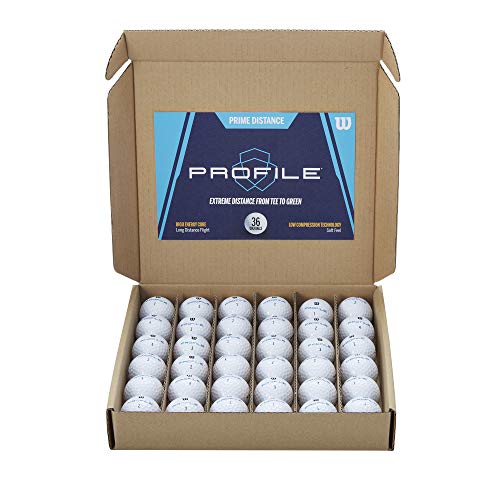
Best for budget-conscious players who want reliable distance with lower spin. The Wilson Profile Distance uses a high-energy core and low-compression technology to deliver a soft feel while reducing backspin, aiding accuracy off the tee. This makes it a practical choice for beginners and casual players who want straightforward, forgiving performance without a premium price.
Best for: beginners and casual players seeking a straight, long flight with a softer feel. Limitation: may not deliver the same greenside control as premium, higher-spin balls.
Nitro Maximum Distance Golf Balls

Best for players who want maximum distance with a ball optimized for low spin. Nitro uses a two-piece titanium core to maximize energy transfer and a symmetrical dimple pattern to reduce drag. The DuPont Surlyn cover adds durability, making the ball course-friendly for golfers who frequently drive the ball long but want reliable flight. Choose this if you want a higher-launch, lower-spin option that emphasizes distance.
Best for: players seeking explosive distance with low spin off the tee. Limitation: durability is strong, but greenside feel may be firmer than softer, premium designs.
TaylorMade TP5X Stripe

Best for players who want a high-performance, low-spin ball with strong driver performance. TP5X Stripe features a new ClearPath Alignment system with enhanced contrast for easier alignment. The Speed Wrapped Core provides a faster, longer ball with a softer feel on contact. It’s designed for golfers who prefer strong distance off the tee with controlled spin into greens, while benefiting from improved feedback on mis-hits.
Best for: players seeking maximum speed with low spin and improved alignment cues off the tee. Caution: higher spin may still be present on mid-irons, affecting short-game control compared with softer ball options.
Buying Guide: Key Considerations For Low-Spin, Distance-Focused Golf Balls
What makes a ball low-spin off the tee? Look for a design that minimizes backspin on the tee, often through core composition, dimple patterns, and cover materials. A lower spin can promote straighter flight, especially for golfers with slower swing speeds or those who tend to slice. Balance distance and feel to ensure the ball also performs well around greens.
Who should use low-spin golf balls off the tee?
Newer players seeking consistency, players with a tendency to slice, and golfers who want predictability on long drives may benefit most. Faster swingers can also gain accuracy if a ball reduces backspin without sacrificing pace off the clubface.
What core and cover features matter?
A softer core can help with feel, but low-spin designs often use configurations that reduce backspin at launch. Durable covers support greenside performance; however, some low-spin designs may trade some greenside bite for driver distance. Consider your typical swing speed and preferred feel when choosing.
How to compare across models?
Evaluate: overall ball speed off the driver, carry distance, straightness of flight, and greenside control. A ball marketed for low spin should show improved launch stability and reduced tendency to curve off the tee, relative to standard distance balls.
What about alignment aids and visibility?
Some models include alignment aids or color contrasts to aid aiming. If you practice with aim consistency, such tools can help reinforce a repeatable setup routine without changing performance on the tee.
Frequently Asked Questions
- Do low-spin golf balls really reduce hooks and slices off the tee? Yes, by reducing backspin, they help promote straighter trajectories for many players, though individual results depend on swing mechanics.
- Are low-spin balls softer or firmer by design? They can vary; some low-spin models use softer cores for feel, while others emphasize speed with a firmer cover. Check product specs for feel and launch characteristics.
- Is distance compromised with low-spin? Not necessarily. Many low-spin balls are engineered to maintain high ball speed and carry, balancing speed with reduced spin.
- Which ball is best for beginner golfers? Wilson Profile Distance offers a budget-friendly option with low spin and distance emphasis, making it a practical choice for beginners.
- Can I use low-spin balls for all clubs? Yes, but greenside control may differ. Some players prefer softer, higher-spin balls around the greens for more spin and stopping power.
- How should I choose among these options? Consider your swing speed, typical miss (slice or hook), and preference for feel. The top picks here emphasize low spin off the tee while maintaining distance and reliability.