In this guide
Looking for the best left-handed driving 1 iron to maximize distance and control off the tee? This guide highlights five solid picks that balance distance, forgiveness, and feel for left-handed players. Ideal buyers include competitive amateurs seeking tighter dispersion, players chasing lower flight and piercing ball flights, and those who want a high-precision club for tight fairway lies. The selections below are organized to help you compare fast ball speed, face technology, and playability at a glance. A concise buying table follows to summarize key details of each option.
| Product | Best For | Loft / Type | Key Benefit |
|---|---|---|---|
| PGF Gold TP Forged Driving Iron | All-around control; versatile tee shots | 1.7mm ultra-thin face, 455 Maraging Steel | Low launch with mid-to-low spin; forgiving |
| COOLO 2# 17° Left | Stronger balls; easier to hit off tee | Maraging steel face; hollow headed | Higher height, more distance; larger sweet spot |
| COOLO 4# 23° Left | Lofted option for tighter fairways | Maraging steel face; hollow headed | Better launch and distance with a bigger sweet spot |
| iDrive Left Handed 13° Driving One Iron Wood Hybrid | Combination of iron control and wood-like forgiveness | 13° loft; regular graphite shaft | Stable flight; easy to align and hit |
| Callaway Paradym AI Smoke 7 Iron (Left Handed) | Maximizing distance and dispersion for mid speeds | 7 iron; | Distance plus improved dispersion |
PGF Gold TP Forged Driving Iron

The PGF Gold TP Forged Driving Iron targets players seeking ultimate control and versatility. It combines a low launch with mid-to-low spin for consistent distance on tee shots and tight lies. A larger face and extended blade work with precision weighting to promote stability at address, reducing distance loss on off-center hits. Best for players prioritizing control on longer approaches and piercing flight off the tee.
Best for: left-handed players who want a premium-feel driving iron with fast ball speed and forgiveness. Limitation: may feel less forgiving on extreme mishits compared with higher-profile hybrids.
MAZEL WM-X1/2 Driving Irons (2# Left)

MAZEL’s WM-X1/2 set offers deep grooves on the hitting face for forgiveness and improved distance accuracy. The back cavity design lowers the center of gravity to help speed, while a low CG supports easy launch and confident feel across fairways and rough. Best for: players seeking reliable distance with consistent spin control in a left-handed configuration.
Limitation: the model line includes multiple irons; ensure the specific loft and shaft options align with your swing.
COOLO Golf Driving Iron (2# Left)
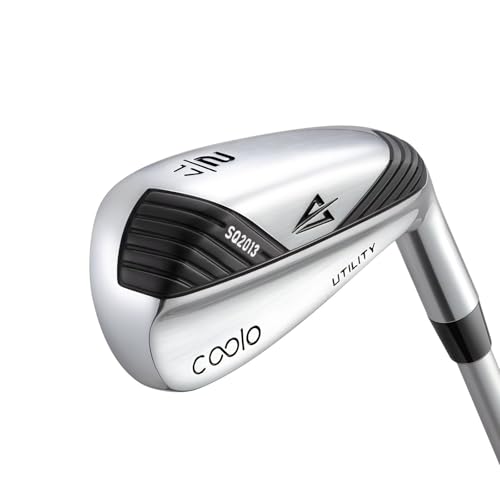
COOLO’s 2# Left Driving Iron uses a forged maraging-steel face and hollow headed construction to deliver high ball speed and a larger sweet spot. The design aims to make the driver-like feel easier to hit, providing higher trajectories with added stability on off-center hits. Best for: left-handed players wanting more height without sacrificing distance.
Limitation: heavier head compared to some modern hybrids, which may affect swing tempo for some players.
Left Handed iDrive 13° Driving One Iron Wood Hybrid

This left-handed model blends a wood-like 13° driving profile with iron-like control. The regular graphite shaft and 13° loft aim to produce a penetrating ball flight with stable dispersion. Best for: players who want a versatile alternative to traditional long irons with wood-like forgiveness. Limitation: not a true iron, which could affect traditional iron shot feedback for some players.
Callaway Paradym AI Smoke 7 Iron (Left Handed)

The Paradym AI Smoke 7 Iron is positioned for average-to-high swing speeds, focusing on distance and dispersion improvements. While not a traditional 1-iron, this left-handed iron provides a comparable long-iron alternative with modern face technology for speed and consistency. Best for: left-handed players seeking a high-performance iron that maintains accuracy on long approach shots. Caution: standard 7-iron loft may not suit players who strictly need very low launch long irons.
Buying Guide: Key Considerations
- Club type and versatility: Decide if you want a true driving iron or a long-iron hybrid approach. Driving irons generally offer more iron-like control, while hybrids provide forgiveness on off-center hits.
- Loft and launch: Higher lofts yield higher launches; lower lofts produce penetrating flight. Match loft with your typical tee conditions and swing speed.
- Face material and construction: Maraging steel and ultra-thin faces maximize ball speed but may affect feel. Hollow-headed designs offer a larger sweet spot for forgiveness.
- Left-hand compatibility: Confirm the model’s availability in left-handed specs and shaft flex to match swing speed and strength.
- Shaft type and weight: Graphite shafts reduce weight and promote speed; steel shafts provide more feedback and consistency for some players.
- Forgiveness vs. workability: Larger heads and perceived stability improve forgiveness but can reduce shot-shaping control for advanced players.
- Price-to-performance balance: Consider whether premium materials and design justify the expected on-course gains for your level of play.
Frequently Asked Questions
- What is a driving iron versus a long iron? A driving iron is designed for off-the-tee or tight lies with lower, penetrating ball flight and more forgiveness than a traditional long iron.
- Who should use a left-handed driving iron? Left-handed players seeking improved control, speed, and workability on tee shots and long approaches.
- Is a maraging steel face better for distance? Maraging steel faces can increase ball speed and stability, but benefit depends on swing and shaft fit.
- Should I choose a hollow-headed driving iron? Hollow heads offer a larger sweet spot and forgiveness, which can help with mis-hits on off-center shots.
- Are driving irons suitable for beginners? They can be, but beginners may prefer higher-launch hybrids for easier distance and confidence.
- Can I use these clubs on rough or fairway? Driving irons are versatile for fairways, rough, and tight lies, but performance varies by model and loft.