In this guide
- Acebirdie 16-Foot Telescoping Retriever Pole
- Rogue Iron Sports Retriever Pole
- Daily Favorites DF 4-in-1 Disc Golf Retriever Pole
- ARefugen Disc Golf Retriever Pole
- Buying Guide: Telescoping Pole Essentials
- How do you pick for night or low-light use?
- What about durability and maintenance?
- Which features improve long-term value?
- Usage and safety tips
- FAQ
The top search intent for “telescoping pole for disc golf” is finding extendable tools to recover discs from water, trees, and rough terrain without getting wet or risking a fall. This guide highlights five practical options suited to different environments and budgets. Best for casual players, best for frequent water retrieval, and best all-around performers are covered below. A quick summary table follows to help you compare at a glance.
| Product | Reach (ft) | Best For | |
|---|---|---|---|
| Acebirdie Disc Golf Retriever Pole | 16 | Casual to moderate outdoor recoveries | Three hooks for versatility |
| Daily Favorites DF 4-in-1 | 16 | Versatile terrains | Four interchangeable heads |
| InZone Kwik-Stik XXL | 18 (21’ effective) | Night and low-light recoveries | Glow Suck-It suction head |
| Dynamic Discs Disc Golf Retriever | 16 | Balanced performance | Padded grip and two-pronged claw |
| ARefugen Disc Golf Retriever Pole | 10 | Compact carry and light weight | Three rubber-coated hooks |
Notes: The table focuses on five strong options that balance reach, versatility, and portability. When selecting, consider typical recovery scenarios (water, trees, brush), the weight you’re comfortable handling, and how compact you need the pole for packing into a bag or car trunk.
Acebirdie 16-Foot Telescoping Retriever Pole
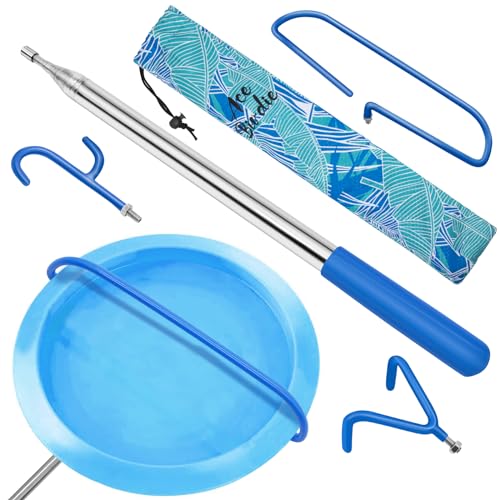
Best for: Casual players who want a versatile, extendable option with multiple hooks. This pole reaches 16 feet and collapses to 16 inches. It ships with three hooks (water, single, and double) to handle discs in water, mud, brush, or under trees. The included carry bag supports easy transport between events or outdoor sessions.
Why selected: The 3-hook setup adds flexibility without needing separate tools. The combination of light weight, compact storage, and a durable frame makes it a reliable all-around choice for typical disc golf terrains.
Caution: While weight is manageable, users should ensure the pole is fully locked at each section to prevent wobble during retrieval.
Rogue Iron Sports Retriever Pole

Best for: Players who value tool durability and easy maintenance. This option emphasizes hardware updates like wing nuts and interchangeable rubberized tips, which can improve longevity and grip in wet conditions.
Why selected: The wing nuts and three rubberized attachments help users adapt to different retrieval tasks while maintaining a solid grip on discs. The warranty and replacement policy support ongoing usability for frequent use.
Caution: The product’s complexity means proper assembly is important for stability; ensure tips are securely fastened before use.
Daily Favorites DF 4-in-1 Disc Golf Retriever Pole

Best for: Players who need multiple retrieval methods in one tool. This pole extends to 16 feet and includes four interchangeable heads: single hook, double hook, multi-hook, and a suction cup for water retrieval.
Why selected: The four-head system supports diverse terrains—water, brush, roots, and uneven angles—so players can adjust without carrying extra gadgets. The stainless steel construction provides a balance of strength and portability.
Caution: The extra heads add weight; use the telescoping mechanism with care to avoid binding or looseness in riverbank or creek conditions.
ARefugen Disc Golf Retriever Pole

Best for: Players who want a compact, lightweight option for occasional retrievals. The 10-foot reach is suitable for light brush and pond edges, with three rubber-coated hooks for gentler handling on discs.
Why selected: The solid stainless steel frame combined with rubber-coated hooks reduces risk of disc damage while maintaining reliable grip. It is easy to transport and quick to deploy for low-to-mid reach recoveries.
Caution: Shorter reach means it’s less effective for deep water or high tree recoveries; plan for longer extension if those scenarios are common in your play.
Buying Guide: Telescoping Pole Essentials
What should you consider when choosing a telescoping pole for disc golf?
- Reach and collapse size: Choose a length that covers your typical recovery scenarios and a compact size that fits your bag when folded.
- Hook types and tips: Look for multiple hooks (single, double, water) and rubberized tips to protect discs and reduce snagging.
- Material and build: Stainless steel bodies offer durability and rust resistance, while lighter alloys improve portability for long rounds.
- Weight and balance: A lighter pole is easier to carry, but ensure it remains sturdy when fully extended. Wing nuts or quick-lock mechanisms improve stability.
- Storage and portability: A carrying bag, clips, and compact retraction help you keep the tool readily accessible but out of the way when not in use.
How do you pick for night or low-light use?
Consider a model with a glow head or reflective components. Some poles integrate light-friendly suction tips or glow-in-the-dark materials to help locate discs after dusk.
What about durability and maintenance?
Opt for brushed or coated hooks to reduce wear on discs. Ensure all moving parts lock securely to prevent wobble, and inspect rubber grips and tips regularly for signs of cracking or loosening.
Which features improve long-term value?
Interchangeable tips, a reliable locking mechanism, and a durable protective carry bag extend usable life and reduce the need for replacement parts.
Usage and safety tips
Always extend and lock sections fully before use. Avoid crossing electrical lines or in-rated areas. Keep the pole stored away from heat sources and sharp edges to maintain integrity over time.
FAQ
- What is a typical reach for most disc golf retriever poles?
Most popular models extend to 16 feet, with some offering up to 18–21 feet when fully extended or via effective reach.
- Are rubberized tips necessary?
Rubberized tips help protect discs and provide better grip, reducing the chance of slipping during retrieval.
- Is a longer pole always better?
Longer poles reach farther into water or high branches but can be heavier and harder to maneuver. Consider your common terrain.
- Should I buy a pole with multiple hooks?
Yes, multiple hooks give flexibility for water, brush, and rocky terrain, improving retrieval success across scenarios.
- Is glow-in-the-dark capability useful?
Glow features are especially helpful for low-light conditions or dusk rounds, aiding nighttime disc location.
- Do these poles require maintenance?
Regularly check locking mechanisms, tighten nuts, and inspect hooks for wear to ensure safe operation.