Finding reliable batteries for golf carts means balancing capacity, longevity, and maintenance. This guide highlights six strong options that cover classic lead-acid setups and modern lithium upgrades. Each selection targets different needs—from heavy-duty deep cycling to modern, app-connected lithium packs—so you can compare performance, compatibility, and care requirements at a glance. The table below summarizes key specs to help you kick off the decision process.
| Product | Chemistry/Type | Voltage | Approx. Capacity | Notes |
|---|---|---|---|---|
| Set of 6 US Battery US1800XC2 | Flooded Lead Acid | 6 | 208Ah | GC2 group, common replacement for T-105 style carts |
| 36V LiFePO4 Lithium Upgrade Kit | LiFePO4 | 36 | 100Ah per pack | Includes charger, BMS, app monitoring |
| WEIZE GC2 6V Battery | AGM | 6 | 240Ah | Set of 6; solid lead-acid alternative |
| US Battery US2200 XC2 | Flooded Lead Acid | 6 | 232Ah | GC2, four-pack option available |
Set Of 6 US Battery US1800XC2 6V 208Ah Deep Cycle Battery

The US1800XC2 is a classic GC2-sized flooded lead-acid battery designed for golf carts, solar setups, and commercial applications. With 208Ah capacity per 6-volt unit, a six-battery pack delivers substantial run-time while leveraging well-established maintenance cycles typical of lead-acid systems. These batteries commonly replace older T-105 or T-605 configurations, fitting widely used carts. They require regular watering and terminal checks to sustain peak performance. Applications extend beyond golf carts to marine and RV use, where deep cycling matters as well.
36V LiFePO4 Lithium Golf Cart Battery Upgrade Kit

This all-in-one lithium upgrade kit replaces traditional lead-acid packs with LiFePO4 cells, offering longer life and lower maintenance. The package includes a 42.6V charger, a 2.8-inch LCD display for real-time monitoring, and a built-in 200A BMS. Bluetooth connectivity lets users monitor voltage, temperature, and health from a mobile app. The system is rated for 5000+ deep cycles with about 80% DOD, delivering dramatically longer lifespan and lower total cost of ownership over conventional batteries when used within appropriate load profiles.
WEIZE GC2 6V 240Ah AGM Golf Cart Battery
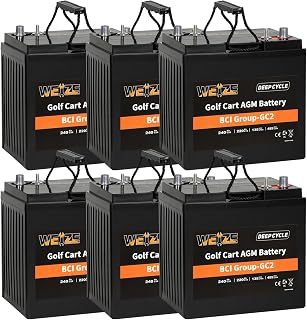
The WEIZE GC2 6V AGM batteries offer a robust, maintenance-light alternative to flooded lead-acid designs. With 240Ah per cell, a six-pack provides strong run times for standard golf carts and related equipment like scissor lifts and floor scrubbers. AGM chemistry reduces water management needs and minimizes gas emission under charge, which can be preferable for enclosed or semi-enclosed installations. Check ventilation requirements and storage practices to maximize lifespan and safety.
US Battery US2200 XC2 6V 232Ah (4-Pack)

The US2200 XC2 pack combines GC2-size 6V units with high-amp-hour capacity, making it a solid option for those seeking reliable, proven performance in a traditional lead-acid format. The 232Ah rating per battery aligns with older cart configurations and provides ample energy supply for standard driving cycles. This option is suitable for users who prioritize compatibility with existing charging and maintenance routines and who want a straightforward, replace-in-kind upgrade path.
Buying Guide: Key Purchase Considerations
- Chemistry and lifespan: Flooded lead-acid batteries are rugged and inexpensive but require maintenance (watering, equalization, ventilation). AGM variants reduce maintenance and venting but can cost more. Lithium options deliver the longest life and highest energy density but require BMS integration and charger compatibility.
- Voltage and capacity: Golf carts commonly use 6-volt blocks with GC2 sizing. Ensure total system voltage matches your cart’s controller and wiring. Higher Ah ratings provide longer run times but can add weight.
- Charger and BMS compatibility: For lithium kits, confirm the charger is compatible with the specific BMS and that the BMS supports passive monitoring or app-based management. For lead-acid, verify your charger is suitable for flooded or AGM chemistry to avoid gassing and premature failure.
- Maintenance and safety: Flooded lead-acid requires periodic watering and terminal maintenance. AGM and lithium systems reduce maintenance, but lithium requires handling high-energy packs with appropriate protection and fire-safety practices.
- Duty cycle and usage pattern: If the cart is used heavily or stored for long periods, higher cycle life and robust depth-of-discharge performance matter more. Lithium systems typically excel in high-cycle, variable-load scenarios.
- Ventilation and installation: Flooded and AGM batteries emit gases during charging. Ensure adequate ventilation and avoid enclosed spaces without airflow. Secure mounting and proper cable management reduce risk and improve reliability.
- Cost of ownership: While lithium upfront costs are higher, their longer life and lower maintenance can reduce total cost over time. Weigh the long-term savings against initial expenditure and charging infrastructure.
When selecting among these options, align your choice with your cart’s electrical system, your maintenance tolerance, and your preferred balance between upfront cost and long-term reliability. Each product listed serves a distinct use case—from time-tested lead-acid replacements to future-ready lithium upgrades—so that you can tailor your setup to your driving and maintenance preferences.