When shopping for a baby’s first golf club, look for soft, safe toys designed for tiny hands and early skill development. This guide highlights five beginner-friendly options ideal for infants to preschoolers. Each product emphasizes sensory play, grip practice, and imaginative play while prioritizing safety. The top picks suit different buyers: gift-givers seeking plush, gentle play; parents desiring durable toddler sets; and caregivers wanting portable, easy-to-store kits for indoor or outdoor use.
Summary of chosen products
| Product | Brand | Best For | Why Selected |
|---|---|---|---|
| Genius Baby Toys My First Golf Bag | Genius Baby Toys | Infants 0–12 months | Soft plush, sensory toys, safe from day one |
| Liberry Toddler Golf Set | Liberry | Toddlers 2–4 years | Durable plastic with portable bag and strap |
| PJG Toddler Golf Set (Blue) | PJG | Young preschoolers 1–4 | 4 clubs, 10 balls, cart for easy transport |
| teytoy My First Baby Golf Bag Gift Set | teytoy | 0–3 years | 6-piece set with plush accessories and bag |
| My Golf Bag Plush Set | Mud Pie | Infants and toddlers | Soft plush bag, ball, and clubs with sounds |
Genius Baby Toys My First Golf Bag

Best for: babies from birth to 12 months and golf-loving families seeking a soft, all-in-one playset. This 9″ plush golf bag includes five sensory toys: golf club, ball, tee, teddy bear referee, and the bag. It targets cause-and-effect learning, grasping strength, and hand-eye coordination through varied textures and sounds.
Why chosen: the plush construction reduces choking and injury risk, and the included bag keeps playtime organized. The kit emphasizes safe exploration with surface-washable components. Consider this if you want an introduction to golf themes without hard parts.
Limitation: designed primarily for infants; older toddlers may outgrow the playset’s dimensions quickly.
Liberry Toddler Golf Set
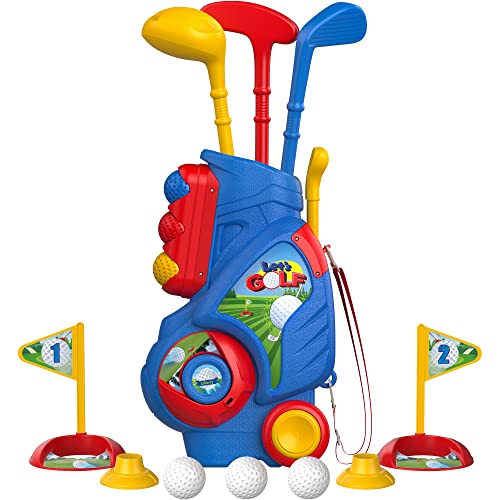
Best for: toddlers around 2–4 years who need a more authentic feel and easy portability. The set uses durable plastic with larger balls (1.8 inches) to reduce choking hazards, and a retractable handle with wheels on the bag for easy pulling.
Why chosen: the strap design helps kids carry accessories without losing pieces, and the club angles resemble real golf equipment while remaining child-safe. Consider this if you want a more “realistic” golf experience for early learners.
Caution: ensure supervision during outdoor use to keep the bag and cart from tipping or detaching parts during play.
PJG Toddler Golf Set (Blue)

Best for: young players ages 1–5 who benefit from a durable, portable set with multiple clubs and a cart. The ABS plastic construction provides safety with rounded edges and grip-friendly handles.
Why chosen: this set balances play value with safety, offering an authentic assortment of clubs and balls similar to a real golf kit. It’s a good pick for families who want a slightly longer-term toy that can grow with a child.
Limitation: plastic clubs are light and may feel less substantial to some kids transitioning to more advanced toys.
teytoy My First Baby Golf Bag Gift Set

Best for: ages 0–3 who benefit from a complete sensory set with a bag, driver, putter, ball, bear, and putting green. Designed to stimulate fine motor skills and auditory senses through crinkle and rattle sounds.
Why chosen: the soft plush materials ensure safe handling, and the built-in textures support multi-sensory exploration. This set encourages imaginative play alongside skill development.
Limitation: plush components may require more frequent cleaning if used by very young babies who explore with their mouths.
My Golf Bag Plush Set

Best for: infants and toddlers who enjoy soft, cuddly textures and simple shapes. The set includes a plush golf bag, ball, driver, putter, and a putting green for basic play routines and imaginative storytelling.
Why chosen: the plush design and interactive sounds create engaging play without sharp edges or hard parts. It’s an excellent pick for baby gift baskets and starter golf play at home.
Limitation: not as feature-rich as cart-based sets; better suited for cozy indoor play or gentle outdoor sessions.
Buying Guide: How to Choose a Baby’s First Golf Club
- Safety first: Look for soft fabrics, rounded edges, and no small pieces that could pose choking hazards. For younger babies, plush sets with no hard parts are ideal.
- Age suitability: Match the product to the child’s age and motor skills. Infants benefit from sensory play, while toddlers may enjoy more structure with larger clubs and portable bags.
- Durability and cleaning: Plush components should be surface washable; plastic parts should be sturdy and easy to wipe down.
- Portability: If you need play sets on the go, choose items with a bag, retractable handle, or wheels to make transport easy.
- Imaginative play potential: Sets that include accessories like bears, putting greens, and carts encourage storytelling and role-play, supporting early social skills.
- Growth and adaptability: Consider whether the set offers a mix of clubs, balls, and accessories that can be used as the child grows or transitions to more advanced toys.
Frequently Asked Questions
- What age is best for a baby’s first golf club? Most sets are appropriate from birth to around 4 years, with younger babies benefiting from sensory plush sets and older toddlers from more structured club sets.
- Are plush golf sets safe for babies who explore with their mouths? Yes, but always supervise and choose items with no detachable small parts and machine-washable fabrics when possible.
- Should I choose a cart-based set or a simple plush bag? Cart-based sets offer portability and realism for active toddlers; plush bag sets are ideal for early, gentle play and travel-friendly use.
- How important are non-toxic materials? Very important. Look for BPA-free, lead-free fabrics and high-quality plastics to minimize exposure and ensure safety during play.
- Can these sets help with motor development? Yes. Reaching, grasping, squeezing, and tracking the ball support fine motor skills and hand-eye coordination in early learners.
- How do I clean and maintain these toys? Plush parts are usually surface washable; plastic components can be wiped with a damp cloth and mild soap. Check the product’s care instructions.