Choosing the right fairway wood can transform your tee-to-green game, especially when focusing on long distance, accuracy, and forgiveness. This article highlights five top 3-wood models designed for American golfers seeking reliability off the fairway and on long approaches. Each product section covers design highlights, performance insights, and who it’s best suited for, backed by listed features from trusted brands.
Summary Table of Selected Products
| Product | Brand | Key Benefit | Loft Range |
|---|---|---|---|
| Callaway 2023 GBB, Fairway 3 Wood | Callaway | Titanium construction with forged carbon sole for speed and forgiveness | – |
| TaylorMade Qi4D Fairway 3 Wood | TaylorMade | Adjustable performance with Trajectory Adjustment System | – |
| Callaway Rogue ST Max D, Fairway 3 Wood | Callaway | First dedicated draw fairway with heel-weight emphasis | – |
| Callaway Paradym AI Smoke Max, Fairway 3 Wood | Callaway | Ai Smart Face with carbon chassis for high speed | – |
| Powerbilt TPS Blackout Max #3 Fairway Wood | Powerbilt | Dual rebound channels and precision forged alloy | – |
Callaway 2023 GBB Fairway 3 Wood

The Callaway 2023 GBB Fairway 3 Wood emphasizes speed and forgiveness through a titanium construction and a forged carbon sole. Multi-material weighting is designed to optimize ball speeds, with a focus on higher launch and more centered contact. The model targets golfers who want a powerful, stable wood that blends speed with consistent performance across mis-hits. The combination of materials also aims to improve turf interaction on varied lies, making it a versatile option for both fairway play and light rough.
TaylorMade Qi4D Fairway 3 Wood
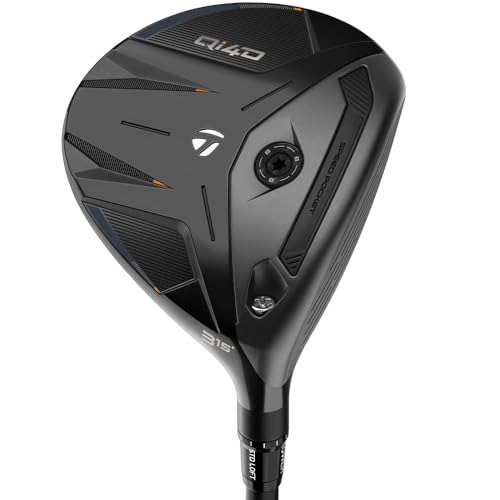
The Qi4D Fairway 3 Wood is built around TaylorMade’s performance recipe that emphasizes distance and versatility. Notable features include a Trajectory Adjustment System weight (8g x 1) to refine flight, spin, and swing weight, plus a 4° loft sleeve to adjust loft, lie, and face angle. This model targets players seeking precise trajectory control and a broad range of workable ball flights without sacrificing distance. Engineers analyzed performance attributes to enhance confidence and consistency with every swing.
Callaway Rogue ST Max D Fairway 3 Wood

The Rogue ST MAX D is Callaway’s focused draw-favoring fairway wood. It features a slightly closed face, an upright lie angle, and extra weight in the heel to promote a powerful draw. This design makes it a compelling option for players who consistently struggle with a fade or slice and want a fairway wood that helps shape shots toward the target. It’s designed to optimize launch and forgiveness for mid-to-high handicappers seeking more consistent draw bias.
Callaway Paradym AI Smoke Max Fairway 3 Wood

The Paradym AI Smoke Max combines Ai-driven face optimization with a carbon chassis and tungsten speed cartridge to maximize speed and launch. The Ai Smart Face technology is designed to optimize ball speed across the face, helping players maintain distance even on toe or heel mis-hits. The result is a high-speed fairway wood that supports long, stable trajectories with strong forgiveness, suited for players who want maximum performance from a lighter carbon framework.
Powerbilt TPS Blackout Max #3 Fairway Wood

The Powerbilt TPS Blackout Max #3 Fairway Wood emphasizes stability and distance with dual rebound channels that support faster ball speeds. Precision forged alloy construction offers durability and performance, while a lightweight black/red shaft option provides a balanced feel for smoother swing sequences. This model suits golfers who want a value-focused option with robust construction and helpful launch characteristics that stay consistent across rounds.
Buying Guide: Key Purchase Considerations
- Launch conditions: Players with higher ball flights may prefer models with higher launch and enhanced forgiveness, like Rogue ST Max D or Paradym AI Smoke Max.
- Face speed and technology: Ai-driven or multi-material frames tend to maximize ball speed across a larger portion of the face; consider Paradym AI and GBB for speed advantages.
- Shot shaping needs: If you need a draw bias or more control over trajectory, models with heel weighting or adjustable settings (Qi4D) can help tailor flight.
- Turf interaction and forgiveness: Forgiving soles and optimized camber help with consistent contact on various lies, especially out of light rough or tight fairways.
- Adjustability: Loft, lie, and face-angle adjustments (e.g., Qi4D) enable fine-tuning to match course conditions and swing changes.
- Durability and build quality: Titanium, carbon chassis, and forged alloys influence feel, durability, and long-term performance, particularly under frequent play.
Notes on selection criteria: The five models discussed were chosen for a balance of speed, forgiveness, shot-shaping versatility, and reliability under common fairway conditions in American courses. Each option targets a slightly different player need, from draw bias to maximum ball speed, ensuring a range of performance profiles for the modern golfer.