Reducing a slice starts with choosing the right ball and the right on-course aids. This guide reviews top anti-slice products designed to minimize unwanted sidespin, promote straighter flights, and help you gain consistent distance. From self-correcting golf balls to on-face compounds and anti-slice sticks, these options address different swing types and budgets. Below is a quick look at five leading products to help you decide which might best fit your game.
| Product | Brand | Key Benefit |
|---|---|---|
| Polara Ultimate Straight | Polara Golf | Self-correcting with anti-slice and anti-hook technology |
| FlightFix | HODL 21 | Coats the clubface to reduce side spin and gear effect |
| The Original Slic Stic | JP Lann | Antislice and anti-hook corrective stick for practice |
| HoneyStick | Honey Golf | Frictions-enhancing gel for centered strikes |
| Gawgivdi Anti-Slice Compound | Gawgivdi | Easy application to reduce spin and improve control |
Polara Golf Self-Correcting Balls

Polara Ultimate Straight Self-Correcting Golf Balls are designed to reduce hooks and slices by at least 75% through a unique dimple pattern that converts unwanted spin into straight-backspin. The soft overall feel helps players of all levels gain confidence on every swing, providing a balance of performance and comfort. Anti-slice and anti-hook correction helps stabilize shots without requiring swing changes, making these balls a practical choice for improving consistency on the course.
HODL 21 FlightFix Anti-Slice Compound
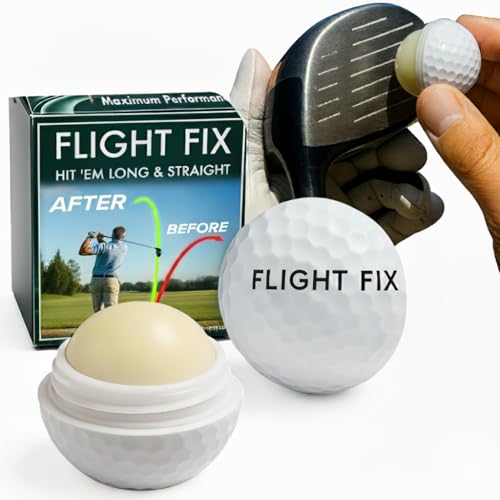
Flight Fix disguises as a compact golf-ball-looking item but delivers a targeted surface treatment to the clubface. By applying a thin, uniform layer of compound at impact, it reduces surface friction and the gear effect that often causes sidespin. The result is straighter, longer shots with a more stable trajectory. Its pocket-friendly design makes it a discreet tool for quick on-course touch-ups and practice sessions, compatible with a wide range of skill levels.
The Original Slic Stic by JP Lann Golf

The Slic Stic is a compact anti-slice and anti-hook solution designed for practical use on the course. It helps correct hooking and slicing motions by addressing side spin and adverse spin dynamics, potentially increasing shot distance and accuracy. While simple in design, the Slic Stic provides a straightforward tool for players seeking a tactile aid to temper their ball flight during practice and play.
HoneyStick Anti Slice Gel

HoneyStick is a user-friendly anti-slice gel designed to optimize friction at the clubface. The gel is formulated to promote centered strikes, maximizing ball speed while reducing sidespin that leads to slices. The compact bottle is designed for on-the-go use, making it convenient to carry in a golf bag for quick touch-ups before and during rounds. It blends practical application with performance potential without altering your swing mechanics.
Gawgivdi Anti-Slice Compound

Gawgivdi’s two-piece anti-slice compound is designed for quick on-face application to reduce spin and improve control. It emphasizes easier handling and a more predictable ball flight by minimizing unwanted sidespin. The compound aims to support longer, straighter shots through improved contact between clubface and ball, appealing to players seeking a simple, effective practice aid or on-course solution.
FLIGHTPATH Premium Golf Tees

FlightPath Premium Tees are engineered to reduce ball spin by minimizing friction between the ball and the tee. Made from durable plastic, these tees are designed to withstand powerful swings without breaking and to help sustain a smooth, straight flight path. While primarily a tee, they offer a complementary approach to addressing spin-related distance loss, especially when used with drivers and irons in practice sessions.
Buying Guide: Key Considerations For Reducing Slice
When choosing tools to combat a slice, golfers should weigh several factors, including compatibility with their swing, the level of intervention desired, and how the product fits into practice routines. Anti-slice balls like Polara and JP Lann’s Slic Stic provide direct impact on spin dynamics, while on-face compounds and gels offer real-time adjustments without changing technique. Here are critical considerations to help you compare options:
- Spin reduction mechanism: Self-correcting balls adjust flight at impact; compounds and gels modify the clubface interaction during swing.
- Skill level and goals: Beginners may benefit from self-correcting balls; intermediate players may prefer on-face aids that fine-tune spin in real time.
- Durability and cost per round: Reusable aids (gels and compounds) can provide multiple uses but may require replacement; balls have a defined number of playable rounds.
- On-course practicality: Pocketable anti-slice aids offer convenience, while larger practice aids may suit dedicated practice sessions.
- Consistency and reliability: Some products are designed for immediate practice benefits; others work best with systematic practice and swing adjustments.
For a balanced approach, players can combine self-correcting balls with targeted practice that reinforces correct swing path and clubface control. Assess your typical miss pattern—whether it’s a slice that starts right and curves left for a right-handed golfer, or a hook-recovery pattern—and select a combination of products that address that primary issue. Testing in practice rounds can help you identify the most effective setup without over-relying on any single tool.