Finding the right junior golf balls can boost confidence, improve feedback, and encourage faster progress for budding golfers. The following selections prioritize softer cores, controllable flight, and durable construction to support beginners through intermediate players. Each option emphasizes a blend of feel, distance, and visibility to help young athletes practice effectively on the range or in the backyard.
| Product | Brand | Key Benefit |
|---|---|---|
| Vice Tour Junior Golf Balls | Vice Golf | Lower compression core for easy energy transfer and soft feel around greens |
| Joyberg Practice Golf Balls 24 Pack | Joyberg | Limited-flight design with visible colors for easy tracking |
| Callaway Supersoft Golf Balls (2025) | Callaway | Soft feel with fast speed and improved greenside control |
| TaylorMade Distance+ Golf Balls | TaylorMade | REACT Speed Core for long-distance potential and wind resistance |
| GoSports Foam Golf Practice Balls | GoSports | Safe indoor/outdoor practice with realistic feel and limited flight |
Vice Tour Junior Golf Balls
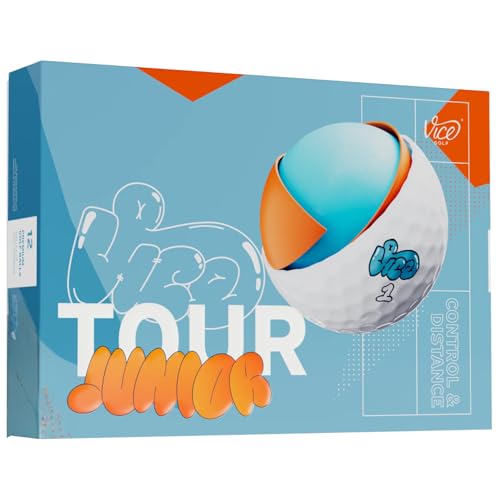
The Vice Tour Junior Golf Balls feature a lower compression core designed to maximize energy transfer from a junior swing, helping to generate solid distance without excessive effort. A 312-dimple design provides lift and carry, supporting stable flight for simplifed trajectory management. Young players benefit from a soft feel that enhances feedback and makes around-the-green practice more enjoyable. This combination is well-suited for juniors who need forgiving performance as they develop swing technique.
Joyberg Practice Golf Balls 24 Pack

Joyberg offers a 24-pack of hollow, practice golf balls designed for both backyard and classroom use. Each ball has a diameter of about 42mm with 26 symmetrical holes on the surface, aiding consistent spin and distance performance comparable to standard balls. Bright multicolor options improve visibility during practice, making it easier for juniors to track their path and improve swing consistency in limited spaces.
Callaway Golf Supersoft Golf Balls

Callaway Supersoft is engineered to deliver increased ball speed with a soft feel. The HyperElastic SoftFast Core promotes faster driver and iron speed, while the soft greenside feel supports improved control around the greens. The hybrid cover balances distance with durability, and the upgraded cover system enhances greenside spin and shot control. This combination makes Supersoft a strong choice for juniors seeking a forgiving ball with a comfortable feel on every shot.
TaylorMade Distance+ Golf Balls

TaylorMade Distance+ balls are designed for speed and distance, featuring a REACT Speed Core that helps maximize velocity off the clubface. An extended flight dimple pattern improves lift and stability, helping balls stay airborne in windy conditions. The Plus Alignment Aid is aimed at simplifying line-up on the tee and green, supporting juniors as they build consistency across drives and approaches. This ball is appropriate for players prioritizing distance with reasonable feedback.
GoSports Foam Golf Practice Balls

GoSports Foam Practice Balls are sturdy foam golf balls designed for safe practice indoors or outdoors. They mimic a realistic dimple texture and trajectory while providing limited flight, which is ideal for practicing every shot within compact spaces. The foam construction reduces risk of damage to surroundings and helps beginners develop swing mechanics and timing without the intimidation of real balls.
Buying Guide: Key Purchase Considerations
When selecting junior golf balls, consider the player’s skill level, swing speed, and practice goals. Softer cores generally offer a better feel for beginners and help reduce distance anxiety, while low-compression designs can improve energy transfer for slower swings. Visibility is another practical concern; bright colors and clear flight paths make tracking easier for young players during practice. Durability matters for outdoor use, especially when balls encounter rough turf or concrete bunkers. For indoor practice, foam balls and limited-flight options reduce risk to surroundings while still allowing swing practice. Finally, be mindful of flight characteristics; some balls emphasize distance, others prioritize control and greenside feel. A mix of practice and game balls can support balanced development across driving, chipping, and putting.
Different perspectives to consider include: beginners who need maximal forgiveness and soft feel; intermediate juniors who want more distance potential without sacrificing feedback; and households seeking budget-friendly options for frequent practice. For a structured practice routine, combine a softer practice ball for swing tempo with a standard-feel ball to simulate real-play conditions. Visibility, color variety, and the ability to observe trajectory are valuable features that can accelerate improvement. Consider the space available for practice and select balls that align with that environment, whether indoors, in a backyard, or on a driving range.