Finding the right pitching wedge helps junior golfers develop a solid short game early. The right club combines lightweight construction, age-appropriate length, and a forgiving loft to build confidence around the greens. This guide highlights five junior pitching wedges that suit growing players, with features designed to promote proper grip, consistent contact, and better touch on short shots. Use the summary table below to compare core details at a glance.
| Product | Brand | Approx. Suitable Age/Height | Loft | Club Length |
|---|---|---|---|---|
| Orlimar ATS Junior Boy’s Lime/Blue Golf Wedge | Orlimar | 3-5 years; 36-44 in | 45.5° | 24.5 in |
| Orlimar ATS Junior Girl’s Pink Golf Wedge | Orlimar | 5-8 years; 44-52 in | 45.5° | 28.5 in |
| Orlimar Golf ATS Junior Boy’s Blue/Lime Golf Wedge | Orlimar | 5-8 years; 44-52 in | 45.5° | 28.5 in |
| Fingerprints F45 Junior Golf Club | Fingerprints | 45″-52″ tall | 45.5° | Unknown |
| Fingerprints F52 Junior Golf Club | Fingerprints | 52″-60″ tall | 45.0-45.5° | Unknown |
Orlimar ATS Junior Boy’s Lime/Blue Golf Wedge (3-5)

The Orlimar ATS junior wedge in a lime/blue scheme is designed for younger players, with a lightweight build to encourage a high launch near the green. It suits children aged 3-5 or those between 36-44 inches tall and features a 28.5-inch length with a 45.5-degree loft for easier contact and short-game control.
Orlimar ATS Junior Boys’ Lime/Blue 3-5 Left-Handed Version
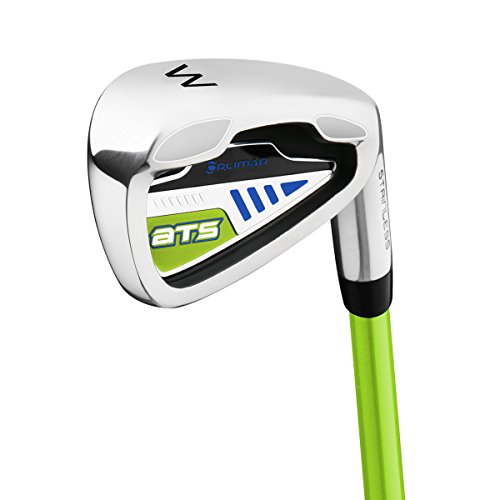
Left-handed or right-handed junior players benefit from the same lightweight design that supports a high launch and improved swing rhythm. The 24.5-inch length and consistent 45.5-degree loft help early golfers gain confidence around the green, making distance control and touch more intuitive as shots approach the hole.
Orlimar ATS Junior Girl’s Pink Golf Wedge (5-8)

This pink-wedge variation targets girls aged 5-8, or those between 44-52 inches tall. It uses a lightweight construction and a 28.5-inch length to match developing swings, with a 45.5-degree loft that supports solid contact and short-game consistency on chips and pitches.
Orlimar ATS Junior Girl’s Sky Blue Golf Wedge (9-12)

Although the target age range skews older, the sky-blue wedge supports adolescents within 9-12 years or 52-60 inches tall who still need a trusted pitching wedge. The 31.5-inch length and 45.5-degree loft help foster precision around the greens while maintaining a lightweight feel for quicker swing speeds.
Orlimar ATS Junior Boy’s Blue/Lime 5-8 Wedge

This variant is tailored for ages 5-8 and heights around 44-52 inches, offering a familiar 28.5-inch length and 45.5-degree loft. The lightweight design supports a smooth transition from longer irons to shorter wedges, helping junior players build confidence near the green and on chip shots.
Orlimar ATS Junior Boy’s Lime/Blue 3-5 (Right-Hand)
The lime/blue 3-5 wedge is optimized for the youngest players, with a compact length and a forgiving loft. This wedge supports early grip development and consistent contact, setting a solid foundation for future short-game improvement as players grow taller and stronger.
Buying Guide: Key Purchase Considerations For Junior Pitching Wedges
Choosing a junior pitching wedge involves assessing size, weight, and loft to align with a child’s growth stage and swing development. Here are important considerations from multiple perspectives:
- Age and Height Suitability: Ensure the club length and grip size fit the child’s current height. Shorter lengths and lighter shafts suit younger kids, while older kids may benefit from longer, slightly heavier options.
- Loft and Forgiveness: A 45.5° loft is common for junior pitching wedges and supports high launches. A forgiving cavity-back or perimeter-weighted design helps players achieve consistent contact as their swings evolve.
- Grip Technology: Some junior clubs include specialized grips (e.g., Fingerprints grips) to guide correct hand placement. Proper grip development is foundational for accurate shots.
- Weight Distribution: Perimeter-weighted or lightweight constructions help with balance, enabling smoother chipping motions and better control near the greens.
- Durability and Materials: Composite shafts and durable plastics keep weight manageable for young players and withstand frequent practice sessions.
- Progression: Consider sets or wedges that cover multiple height ranges so a child can transition without frequently replacing equipment.
- Safety and Training Value: Lightweight designs reduce fatigue and encourage proper technique. Look for clubs designed specifically for juniors rather than scaled-down adult clubs.
- Aesthetics and Motivation: Color schemes and kid-friendly designs can boost enthusiasm, potentially improving practice consistency and engagement.
Warranty and retailer policies can influence long-term value, especially for growing children. When selecting, balance immediate playability with expected growth over the next one to two seasons. If possible, have a child try a few options to observe grip comfort and swing feel before purchase.