Looking for a new golf launch monitor to improve your game at home or at the range? This guide highlights five top options that balance accuracy, portability, and value. Each pick is best for different practice needs—from indoor swing analysis to portable on-the-go sessions. The buyer profile most suited for each product is noted to help you choose quickly.
| Product | Best For | Key Benefit |
|---|---|---|
| Garmin Approach R10 (Renewed) | Home practice, indoors | Mobile analytics with Garmin Golf app |
| Rapsodo MLM2PRO | Home and driving range | Pro-level metrics, robust data |
| Rapsodo Mobile Launch Monitor | Compact practice spaces | GPS tracking, video playback |
| Swinora Launch Monitor | Indoor/outdoor versatility | Zero annual fees, environmental sensors |
| PRGR HS 130-A | Budget-conscious training | Doppler radar, AAA batteries |
Below are five focused sections for each product. Each entry explains who it’s best for, why it stands out, and a practical limitation to consider. Use these comparisons to decide which monitor aligns with your training goals and space constraints.
Garmin Approach R10: Portable Home Launch Monitor
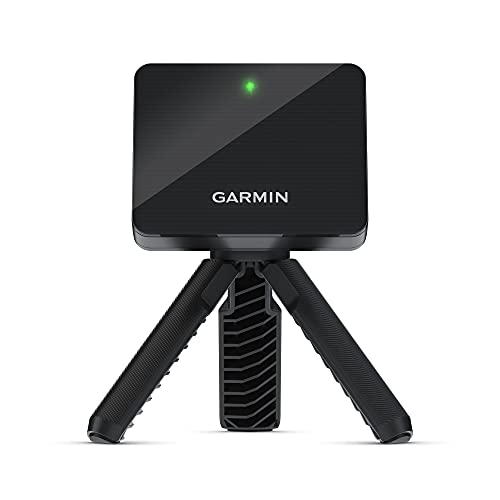
The Garmin Approach R10 is designed for home use and indoor practice, with battery life up to 10 hours when detached from power. It supports key metrics such as club head speed, ball speed, swing tempo, spin, and launch angle when paired with the Garmin Golf app. Best for players who want a portable, app-driven setup that integrates with existing Garmin devices and emphasizes shot-dispersion visuals for club-specific improvement. A limitation is that performance relies on a compatible smartphone app and proper setup for accurate tracking.
Rapsodo MLM2PRO Launch Monitor

Best for players seeking pro-level data at home or on the range. The MLM2PRO uses Doppler radar and a dual-camera setup to capture 15 core metrics, including spin rate, spin axis, carry distance, club speed, and launch angle. It includes a 45-day premium trial for enhanced features like simulated courses and app integrations. Choose this if you want comprehensive analytics and an expandable ecosystem for training. A potential limitation is the need for compatible devices and some setup to access premium features.
Rapsodo Mobile Launch Monitor

Best for on-the-go practice in smaller spaces. This device emphasizes GPS satellite view for shot tracking and provides real-time swing analysis, video playback, and active shot tracers. Ideal for players who want an integrated mobile experience with visual playback to study swings. Limitation: It is primarily designed for iPhone/iPad users, which may affect compatibility for Android-only setups.
Swinora Launch Monitor & Simulator

Best for players who want a feature-rich monitor with zero annual fees. Swinora emphasizes environmental sensors that automatically adjust metrics to real-time conditions, along with 3D driving range visuals and trajectory data. It supports both indoor and outdoor use and features clear space requirements (at least 15 ft total space for accurate indoor use). A potential drawback is that it demands precise placement to ensure radar accuracy in smaller rooms.
PRGR HS 130-A Portable Launch Monitor

Best for budget-conscious buyers who still want essential data. The PRGR uses advanced Doppler radar to measure club head speed (with or without a ball), ball speed, smash factor, and total & carry distance. It runs on AAA batteries and does not require Wi-Fi or apps, offering a straightforward setup. Limitation: It provides the core metrics but lacks some of the integrated app features and subscription options seen in higher-end models.
Buying Guide: Key Purchase Considerations
- Space and setup: Evaluate indoor room dimensions and ceiling height. Some models require more space for accurate data capture, especially those with 3D driving range or larger radar footprints.
- Data depth vs. ease of use: Decide if you want deep analytics (spin rate, axis, launch angle) or a simpler readout focused on ball speed and carry.
- App and ecosystem: Consider compatibility with your smartphone, existing golf apps, and whether you value features like video playback, simulated courses, or third-party integrations.
- Power and portability: Battery life matters for frequent practice sessions away from outlets. Some models run on batteries or include rechargeable packs.
- Indoor vs. outdoor use: Some monitors emphasize indoor accuracy with room-to-ball alignment, while others are designed for outdoor practice with weather-resistant features.
- Cost vs. value: Balance upfront cost with data richness, subscription needs, and potential add-ons like additional balls, sensors, or software.
- Space requirements: Note the recommended space behind the ball and total flight path needed to ensure reliable measurements, especially for indoor setups.
FAQ: Quick Answers for Buyers
What should I consider when choosing a golf launch monitor for indoor use?
Look for compact size, stable mounting options, and metrics that remain accurate in limited spaces. Ensure the device supports indoor calibration and offers a reliable or app-supported measurement system.
Do I need a subscription for most launch monitors?
Many monitors offer basic data out of the box, while several models provide optional premium memberships or trial periods for enhanced features like simulated courses and advanced analytics.
Is GPS tracking essential in a launch monitor?
GPS tracking can improve shot localization and session replay, but it is not strictly required for core swing metrics. It varies by model.
Can I use these monitors with Android devices?
Some models support Android, while others focus on iOS. Check device compatibility before purchasing to ensure full feature access.
Which monitor is best for beginners?
Budget-friendly options with straightforward metric readouts, like PRGR or Swinora, can be ideal for beginners, while still offering room to grow with more data as skills develop.
What’s the difference between radar-based and camera-based monitors?
Radar-based units measure speed and ball flight through Doppler or radar tech, often providing robust distance data. Camera-based systems use video and analytics for swing analysis and shot tracing, which can offer rich visual feedback.