Looking for a portable golf launch monitor that delivers reliable swing data without breaking the bank? This guide highlights five top picks that suit different types of players, from casual weekend warriors to serious at-home trainers. Each option measures key metrics like club speed, ball speed, launch angle, and distance, helping you optimize practice sessions. Whether you want a simple, battery-powered unit or a feature-rich simulator, there’s a portable launch monitor designed to fit your needs.
Buyer summary table (quick comparison)
| Product | Best For | Key Strength | Limitations |
|---|---|---|---|
| PRGR HS 130-A | Budget-conscious trainers | AAA-battery powered, no apps required | Basic data set, memory for 500 swings |
| Rapsodo MLM2PRO | Serious practice at home | Dual cameras, extensive metrics | May require setup for best results |
| Garmin Approach R10 (Renewed) | Indoor training with app pairing | Shot dispersion, app-driven insights | Renewed unit; battery life varies by use |
| Voice Caddie SC200Plus | Real-time feedback seekers | Voice output and Doppler radar data | Display may be less intuitive for beginners |
| Shot Scope LM1 | Compact travel practice | Real-time smash factor and carry | Smaller footprint; fewer smart features |
PRGR HS 130-A Portable Golf Launch Monitor

The PRGR HS 130-A uses advanced doppler radar to measure club head speed, ball speed, smash factor, total and carry distance. It is aimed at budget-conscious buyers who want reliable swing data without apps or Bluetooth. The unit runs on AAA batteries and stores up to 500 past swings, making it simple to compare trends over time. This is best for golfers who want quick, on-the-go feedback with minimal setup, especially if you practice without a ball during early training.
Who it’s best for: Beginners and casual players who want an affordable, straightforward monitor for swing speed training. Why selected: It provides core metrics with a simple interface and no subscription or connectivity requirements.
Caution: Lacks smartphone integration and some advanced metrics found in higher-end models, which may limit in-depth analysis for competitive players.
Rapsodo MLM2PRO Launch Monitor

The MLM2PRO offers tour-level shot tracking with Doppler radar and a dual-camera setup for detailed data on carry distance, ball speed, club speed, launch angle, spin, and more. It functions as a home or outdoor golf simulator with real-time swing analysis and video playback. Ideal for players who want comprehensive post-session review and integrated practice scenarios. It also includes a 45-day premium trial for access to simulated courses and additional features.
Who it’s best for: Players seeking in-depth metrics and visual feedback, plus home simulator capabilities. Why selected: Its combination of radar data, dual cameras, and video review supports structured improvement.
Caution: Setup and calibration can require a bit more time, and higher data volume may demand a compatible device to maximize features.
Garmin 010-02356-00 Approach R10 (Renewed)
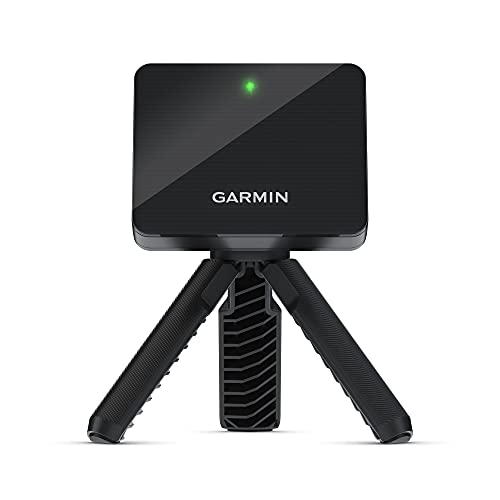
The R10 is a portable launch monitor that pairs with the Garmin Golf app to track metrics such as club head speed, ball speed, swing tempo, and spin, then displays a shot dispersion chart. Its training mode helps users identify strengths and weaknesses across different clubs. This option is best for players who want app-driven insights and a robust indoor training experience. Choose this if you value integrated statistics and coached-style feedback via a connected ecosystem.
Who it’s best for: Players who prefer app-driven data and methodical improvement across clubs. Why selected: It combines reliable metrics with a structured training interface and dispersion analysis.
Caution: Renewed units may have shorter battery life or unknown wear; ensure seller guarantees and verify battery condition before purchase.
Voice Caddie SC200Plus Portable Launch Monitor

The SC200Plus uses Doppler radar with real-time data and features an LCD display with voice output for immediate feedback. It supports home or outdoor practice with a 12-hour battery life and a focus on speed, distance, and direction metrics. This model suits players who benefit from audible cues and quick, on-the-spot guidance during practice sessions.
Who it’s best for: Golfers who want hands-free feedback during practice and a straightforward data readout. Why selected: Real-time voice output helps maintain tempo without looking away from the ball.
Caution: The approach to data interpretation may require getting used to voice cues; beginners might prefer a visual-only readout at first.
Shot Scope LM1 Portable Mini Launch Monitor

The LM1 emphasizes advanced ball and club speed tracking with real-time smash factor and total carry distance. Its compact form makes it a convenient travel companion for practice on the range or at home. This monitor is best for players who want a lightweight option that still delivers actionable speed and distance metrics.
Who it’s best for: Players needing a compact device for quick sessions and travel-friendly use. Why selected: It provides essential speed and distance metrics in a small, portable package with real-time updates.
Caution: It may offer fewer advanced features and app integrations compared with larger monitor systems.
Buying Guide: How to Choose Your Portable Golf Launch Monitor
What metrics matter most to you? Common essentials include ball speed, club speed, launch angle, and carry distance. More advanced models add spin metrics, shot dispersion charts, and video review. Consider your practice environment—indoor spaces demand different tracking reliability than open ranges.
Power and connectivity: Do you want battery-powered operation or Bluetooth/app-enabled features? Battery life varies; some units rely on AAA batteries, while others offer longer rechargeable options. Apps and GPS features can enhance analysis and data storage, but they require a compatible device and sometimes ongoing subscriptions.
Data presentation: Decide whether you prefer real-time voice feedback, visual dashboards, or video playback. Some users benefit from immediate audio cues, while others want detailed charts and post-session reviews.
Space and setup: If you practice indoors, ensure the device can capture data within your available distance and line of sight. Indoor rooms require clear space behind and in front of the ball to avoid skewed readings.
Budget and maintenance: Budget options provide core metrics with minimal setup, while premium models deliver richer data and more robust software ecosystems. Consider long-term costs such as app subscriptions and cloud storage if you plan frequent use.
Frequently Asked Questions
- What is the main difference between Doppler radar and GPS-based monitors? Doppler radar tracks the speed and trajectory of the ball and club, while GPS-based systems track position and shot location to analyze dispersion and distance across larger areas.
- Do I need an internet connection for these devices? Some models require no connection and work offline, while others rely on a companion app for data visualization and saving sessions.
- Can I use these monitors indoors? Yes, many models are designed for indoor use withsupported calibration and spacing recommendations for accurate readings.
- Is a subscription required for full features? Several units offer premium features via app subscriptions, though basic data is typically available without a subscription.
- Which monitor is best for beginners? Budget-friendly options with straightforward data, minimal setup, and clear displays tend to appeal most to beginners.
- How important is battery life for practice sessions? Longer battery life matters for extended practice sessions, especially if you train outdoors or without easy charging access.